What Does Water Baptism Mean
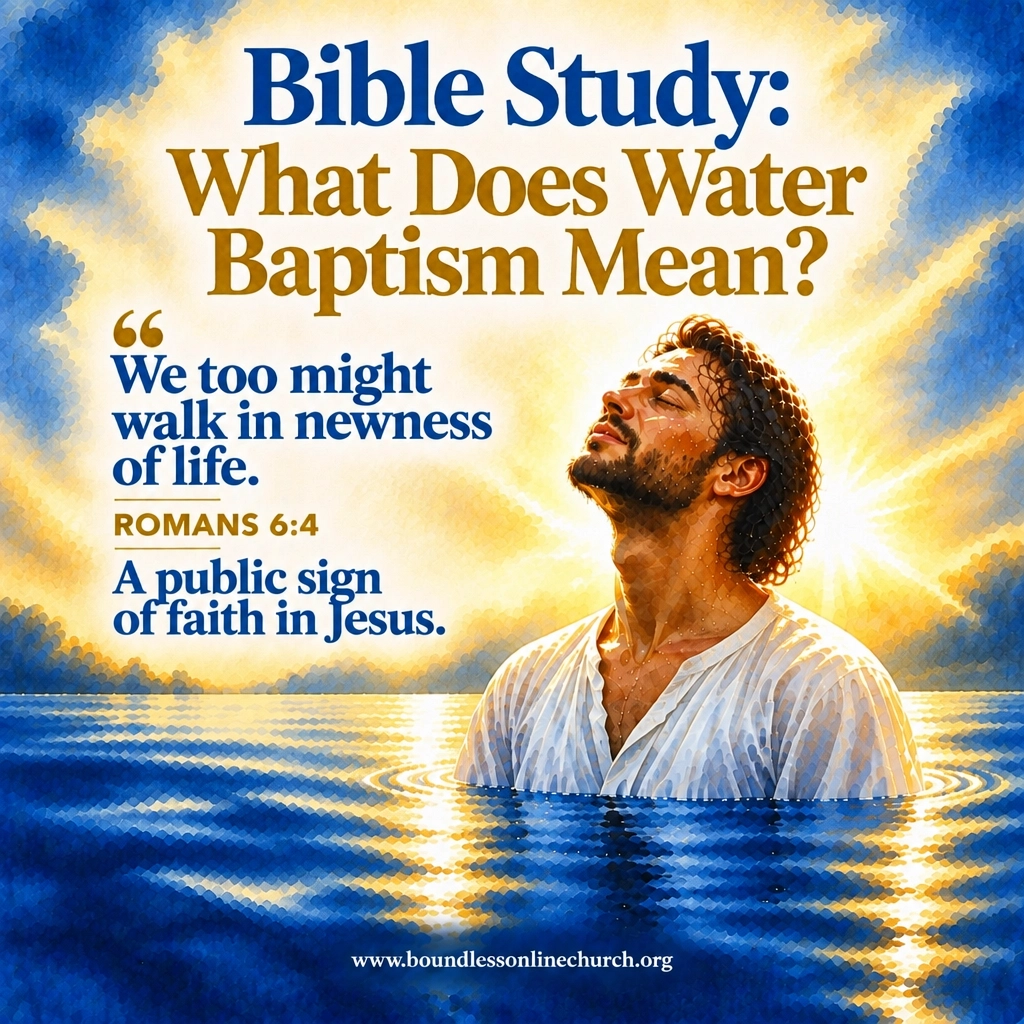
Water baptism is a public act of obedience for believers who have repented and placed their faith in Jesus Christ. In Assemblies of God teaching, it does not save a person, but it does visibly testify that they now belong to Jesus and are identifying with His death, burial, and resurrection.This article explains what water baptism means, why believers are baptized after conversion, why immersion is practiced, how water baptism differs from baptism in the Holy Spirit, and how to approach this ste
Water baptism is a public act of obedience for believers who have repented and placed their faith in Jesus Christ. In Assemblies of God teaching, it does not save a person, but it does visibly testify that they now belong to Jesus and are identifying with His death, burial, and resurrection.
This article explains what water baptism means, why believers are baptized after conversion, why immersion is practiced, how water baptism differs from baptism in the Holy Spirit, and how to approach this step with peace, clarity, and biblical confidence.
Water baptism can bring joy, questions, and even nervousness. Some people wonder whether they are ready. Others ask whether baptism is necessary for salvation, whether immersion matters, or how water baptism differs from baptism in the Holy Spirit. These are honest questions, and Scripture gives us a clear, grace-filled foundation.
The Assemblies of God teaches that water baptism is for those who have repented and believed in Jesus Christ as Savior and Lord. It is practiced by immersion because immersion portrays the biblical picture of being buried with Christ and raised to walk in newness of life.
What Does Water Baptism Mean in the Assemblies of God?
Water baptism is a public declaration that a person has placed faith in Jesus Christ. It is an outward expression of an inward work of grace.
The Assemblies of God recognizes water baptism as one of the ordinances of the church, along with the Lord’s Supper. Baptism is commanded in Scripture, and believers are encouraged to follow Jesus in this act of obedience.
Jesus included baptism in His command to make disciples:
This command appears after Jesus’ resurrection and before His ascension. Baptism is therefore not a cultural tradition added later by the church. It is part of Jesus’ instruction for forming disciples.
Water baptism does not earn God’s forgiveness. We are saved by God’s grace through faith in Jesus Christ, not by performing a religious ceremony. Yet genuine faith responds to Jesus with love and obedience. Baptism is one of the first visible steps of discipleship for a new believer.
Why Does Water Baptism Follow Conversion?
Throughout the New Testament, baptism follows a person’s response to the gospel.
On the day of Pentecost, Peter preached about Jesus’ death and resurrection. When the crowd was convicted, they asked what they should do. Peter responded:
The order matters. Repentance and faith are responses to the gospel, and baptism follows as a public act of obedience.
In Samaria, people believed Philip as he preached the good news of the kingdom of God and the name of Jesus Christ. “Both men and women were baptized” (Acts 8:12). In Acts 8, the Ethiopian official heard the gospel from Philip and then asked to be baptized after believing in Jesus.
This pattern does not suggest that baptism is unimportant. It shows that baptism is connected to personal faith and discipleship. The person being baptized is not merely participating in a family custom or community ceremony. They are publicly identifying with Jesus Christ.
For someone who has recently trusted Christ, baptism can become a meaningful declaration: “Jesus has saved me, and I belong to Him.”
Why Does the Assemblies of God Practice Baptism by Immersion?
The Assemblies of God practices believer’s baptism by immersion because immersion most clearly represents the biblical symbolism of death, burial, and resurrection.
Paul wrote:
When a believer goes beneath the water, the action pictures burial. When the believer rises from the water, the action pictures resurrection and new life.
The water does not magically erase sin. Jesus alone saves and cleanses. The water serves as a visible sign that points to the gospel: Christ died for our sins, was buried, and rose again. Through faith in Him, we receive forgiveness and new life.
Immersion also gives physical expression to the personal nature of conversion. Baptism is not merely an idea someone agrees with. It is a whole-person response to Jesus: body, heart, mind, and will.
The method should never become a source of pride or division among Christians. The focus of baptism is not the water itself but the Savior to whom the water points. In Assemblies of God churches, immersion is practiced because it communicates the New Testament picture with particular clarity.
Does Water Baptism Save a Person?
Water baptism is important, but the Assemblies of God does not teach that the water itself saves a person.
Salvation is found in Jesus Christ. Scripture teaches that we are saved by grace through faith, not by works that allow us to boast:
The criminal who trusted Jesus while hanging beside Him had no opportunity to be baptized, yet Jesus promised him a place in paradise (Luke 23:39–43). This shows that baptism is not a replacement for faith in Christ.
At the same time, we should not use salvation by grace as an excuse to disregard Jesus’ command. A believer who understands baptism as an act of obedience should approach it with gratitude, humility, and willingness.
Peter offers an important clarification when he writes that baptism is not merely “a removal of dirt from the body” but an appeal to God for a good conscience through the resurrection of Jesus Christ (1 Peter 3:21). The power is not in washing the body. The meaning is found in a faith-filled response to the risen Christ.
How Does Baptism Identify a Believer With Christ?
Baptism tells the story of the gospel through a believer’s physical movement.
Going beneath the water
Going beneath the water represents identification with Christ’s death and burial. The believer acknowledges that salvation is not self-improvement or spiritual polishing. The old life under sin could not be repaired by human effort. It needed to be surrendered to Christ.
This does not mean a believer becomes instantly perfect. Christians continue growing, confessing sin, receiving grace, and learning obedience. But baptism declares a new direction and a new allegiance.
Rising from the water
Rising from the water represents resurrection and new life. The believer is saying, “My future is now joined to Jesus.”
Romans 6 does not describe baptism as a license to continue in sin. Instead, Paul explains that believers are united with Christ so they may no longer be ruled by sin. The gospel does not only forgive the past; it creates hope for transformed living.
This is especially meaningful for people carrying shame. Baptism does not announce that a person has never failed. It announces that Jesus is greater than their failure and that their identity is now rooted in Him.
Standing before witnesses
Baptism is also public. Friends, family, and the church community witness a person’s confession of faith. This public dimension matters because Christianity is not meant to be lived as a hidden, isolated spirituality.
A believer may feel vulnerable standing before others, especially if their story includes grief, addiction, church hurt, doubt, or a long season of running from God. Yet baptism can become a holy moment of belonging. It says, “I am not hiding from Jesus. I am choosing to follow Him.”
Is Water Baptism the Same as Baptism in the Holy Spirit?
No. In Assemblies of God teaching, water baptism and baptism in the Holy Spirit are distinct experiences with different meanings.
Water baptism is an outward act of obedience in water. It publicly identifies a believer with the death, burial, and resurrection of Jesus.
Baptism in the Holy Spirit is a distinct work of the Holy Spirit that empowers believers for Christian life, witness, and service. Jesus told His disciples:
The Assemblies of God teaches that the baptism in the Holy Spirit is available to all believers and is accompanied initially by speaking with other tongues, as described in Acts 2:4. This Spirit baptism should not be confused with conversion, water baptism, or the ongoing work of the Holy Spirit in a believer’s life.
These teachings are not competing messages. Water baptism points to identification with Christ. Baptism in the Holy Spirit points to empowerment for witness and ministry.
A person should not feel pressured to treat water baptism and Spirit baptism as interchangeable. They are both rooted in Scripture, but they describe different aspects of life with God.
Water baptism says, “I belong to Jesus.”
Baptism in the Holy Spirit says, “The Holy Spirit empowers me to live and witness for Jesus.”
What Should Someone Do Before Being Baptized?
A person preparing for water baptism should take time to consider the gospel, their faith in Jesus, and the meaning of the step they are taking.
Here are several helpful questions:
No believer understands every doctrine perfectly before baptism. Spiritual growth continues for a lifetime. A person does not need to have every question answered before obeying Jesus. However, baptism should be approached thoughtfully rather than treated as a performance, trend, or pressure-filled ritual.
If you are unsure, keep bringing your questions to Scripture, prayer, and trusted spiritual care. God is not threatened by sincere questions, and He welcomes those who seek Him.
Can Someone Be Baptized Again?
People sometimes wonder whether they should be baptized again because their earlier baptism happened before they genuinely understood the gospel, before they trusted Christ, or in a setting that did not reflect their present faith.
There is no universal answer for every situation. A person’s history and conscience matter. Some may be seeking baptism for the first time as a believer. Others may be considering whether a previous baptism was a meaningful expression of faith.
The best response is not shame or fear. It is honest conversation, prayer, and biblical guidance. Baptism should not become a cycle of anxiety in which a believer repeatedly questions whether they performed the act correctly. Our confidence rests in Jesus, not in the perfection of our memory or the emotional intensity of the baptism service.
If this question troubles you, connect with a trusted church leader and walk through your story carefully. The purpose is not to create fear but to help you respond to Christ with a clear conscience and joyful obedience.
What Does Water Baptism Mean for Someone Who Feels Unworthy?
Many people feel unworthy to be baptized because they remember their past. They may think, “I need to become better before I can publicly identify with Jesus.”
But baptism is not a graduation ceremony for people who have achieved spiritual perfection. It is a testimony of grace.
The person entering the water is not saying, “I have made myself righteous.” They are saying, “Jesus has met me with mercy, and I trust Him.”
The gospel does not minimize sin, but it also does not allow shame to have the final word. At the cross, Jesus took the judgment we deserved. In the resurrection, He opened the way to new life. Baptism allows a believer to publicly celebrate that good news.
If you feel nervous, remember that Jesus is not asking you to perform for an audience. He is inviting you to follow Him. The church is not meant to be a gallery of perfect people. It is a community of redeemed people learning to walk in grace.
How Can the Church Support Someone Being Baptized?
A healthy church community should make baptism a joyful, Scripture-centered, and welcoming experience.
The church can support a new believer by:
Baptism should lead into deeper participation in the body of Christ. After baptism, a believer still needs prayer, Scripture, worship, fellowship, correction, encouragement, and opportunities to serve.
This is why online Christian community can be meaningful for people who are homebound, traveling, recovering, working unusual hours, or hesitant to enter a church building. Digital connection cannot replace every expression of local church life, but it can help someone move from isolation toward prayer, Scripture, and Christian friendship.
You can explore what Boundless Online Church is, read about whether online church can create real belonging, connect with the Bible Study Club, visit the Prayer Wall, continue growing through this Bible Study Club overview, and read what the difference is between water baptism and Holy Spirit baptism.
What Is the Main Message of Water Baptism?
The central message of water baptism is simple and beautiful: Jesus Christ died and rose again, and the believer publicly identifies with Him.
Baptism does not mean a person will never struggle again. It means their life now belongs to Christ. It does not mean they have reached spiritual maturity. It means they are choosing to walk with Jesus as His disciple.
It does not erase the need for daily repentance, prayer, Scripture, or community. Instead, it marks a visible beginning of obedient discipleship.
For someone who has been baptized, the memory can become a source of encouragement during difficult seasons. When faith feels weak, the believer can remember the truth they publicly confessed: Jesus is Lord, grace is real, the old life does not define them, and resurrection hope is stronger than fear.
For someone considering baptism, there is no need to hide honest questions. Bring them to Scripture. Bring them to prayer. Bring them into a trusted Christian conversation. Jesus is patient, present, and faithful.
A Prayer for Those Considering Baptism
Lord Jesus, thank You for meeting us with grace and calling us into new life. Help every person considering water baptism understand the beauty of identifying with Your death, burial, and resurrection. Give them courage to obey, wisdom to ask questions, and peace that rests in Your finished work. Surround them with loving Christian community and help them continue growing as faithful disciples. Amen.
Text us for prayer at 901-213-7341 or visit www.boundlessonlinechurch.org to take your next step in prayer, Bible study, worship, and Christian community.
Frequently Asked Questions About Water Baptism
What does the Assemblies of God teach about water baptism?
The Assemblies of God teaches that water baptism is commanded in Scripture for those who have repented and believed in Jesus Christ. It is practiced by immersion and publicly symbolizes identification with Christ’s death, burial, and resurrection.
Does water baptism save a person according to Assemblies of God teaching?
No. The Assemblies of God teaches that salvation comes through faith in Jesus Christ by God’s grace. Water baptism is an important act of obedience and a public testimony of faith, but the water itself does not save.
Why does the Assemblies of God baptize by immersion?
Immersion best represents the biblical symbolism described in Romans 6:3–4. Going beneath the water pictures burial with Christ, and rising from the water pictures being raised to walk in newness of life.
Is water baptism the same as baptism in the Holy Spirit?
No. Water baptism is an outward act of obedience that identifies a believer with Christ. Baptism in the Holy Spirit is a distinct empowering experience for Christian witness and service. Assemblies of God teaching connects Spirit baptism with the initial physical evidence of speaking in tongues.
Should a person be baptized if they still have questions about faith?
A person should understand the gospel and personally trust Jesus before being baptized. However, complete theological knowledge is not required. Honest questions can be brought to Scripture, prayer, and trusted Christian leaders while a person continues growing as a disciple.
Read our Privacy Policy and Terms & Conditions.
www.boundlessonlinechurch.org
#biblestudy #faith #prayer #discipleship #grace #evangelism #apologetics