
Daily Truths: Why We Trust the Bible
- Boundless Team

- Feb 26
- 6 min read
We live in a world where trust feels harder to come by every day.
News sources contradict each other. Social media feeds are full of opinions. Even expert advice seems to shift with the wind.
So when someone asks, "Why should I trust the Bible?": that's not just a fair question. It's an essential one.
At Boundless Online Church, we believe the Bible isn't just another religious book or collection of ancient wisdom. We believe it's the inspired Word of God: living, active, and completely trustworthy.
That's the first of the 16 Fundamental Truths we hold as part of the Assemblies of God: The Scriptures are divinely inspired and the infallible, authoritative rule of faith and conduct.
But what does that actually mean for your everyday life? And why should you stake your faith on it?
Let's dig in.
What We Mean by "Inspired"
When we say the Bible is inspired, we're not talking about the same way a poet gets inspired by a sunset or a musician gets inspired by a melody.
Divine inspiration means something far more profound.
The Apostle Paul put it this way: "All Scripture is God-breathed and is useful for teaching, rebuking, correcting and training in righteousness" (2 Timothy 3:16).
God-breathed. That's the word we use. The Bible didn't drop from heaven leather-bound and gold-leafed. But every word: every story, every command, every promise: was guided by the Holy Spirit through human authors.
Over 1,500 years, more than 40 different writers contributed to Scripture. They came from all walks of life: shepherds, kings, fishermen, prophets, tax collectors. They wrote in different languages, in different cultures, facing different challenges.
And yet, the Bible tells one unified story: God's relentless love for humanity and His plan to restore what sin broke.
That kind of unity doesn't happen by accident.
The Evidence Is Real
Some people think trusting the Bible requires you to shut off your brain and ignore evidence.
That couldn't be further from the truth.
The Bible stands up to scrutiny better than any other ancient text in human history.
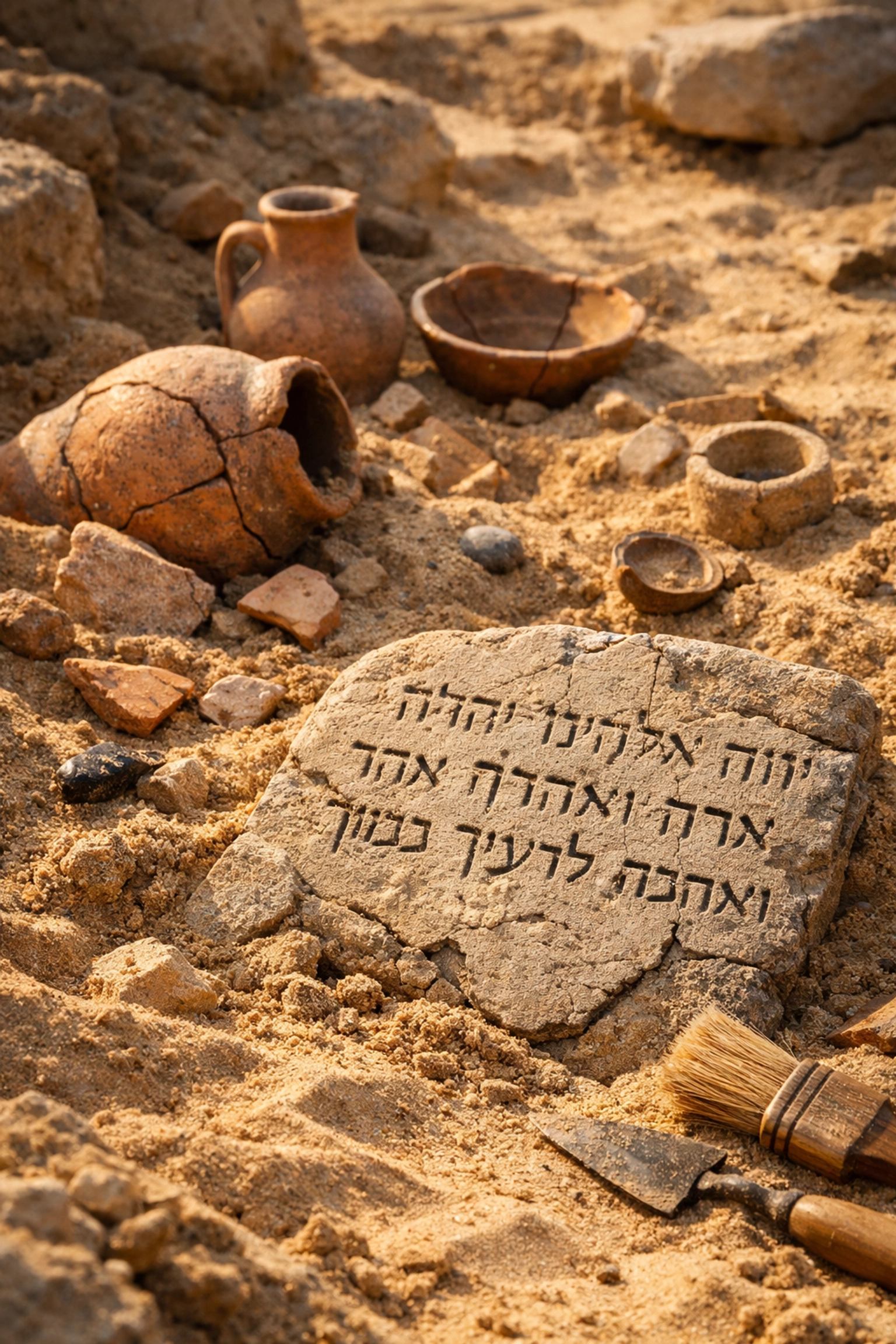
Archaeological Confirmation
For decades, skeptics dismissed parts of the Bible as myth. They said the Hittites never existed. They questioned whether King David was real. They doubted the accuracy of Gospel locations.
Then archaeologists started digging.
The Hittite civilization? Confirmed. David's kingdom? Evidence found. Cities like Jericho, Nazareth, and Capernaum? All verified.
Time and again, the spade has backed up the Scriptures.
One of the most remarkable discoveries happened in 1947. A shepherd boy threw a rock into a cave near the Dead Sea and heard something shatter.
Inside were the Dead Sea Scrolls: ancient manuscripts of the Old Testament dating back to around 125 BCE. When scholars compared these scrolls to later versions of Scripture, they found almost no significant differences.
That's over 2,000 years of careful preservation. No other ancient document comes close.
Manuscript Evidence
If you want to verify an ancient text, you need manuscripts: copies made before the printing press existed.
For most ancient writings, we have a handful of copies, often written centuries after the original. For example, we have only seven manuscripts of Plato's works. The oldest one dates to 1,200 years after he died.
But for the New Testament alone? We have over 5,800 Greek manuscripts. Some date within a generation of the original writings.
The Bible has more textual evidence than any other document from the ancient world. It's not even close.
That kind of preservation doesn't happen by chance. It happened because communities of believers treasured these words as sacred: because they knew they had encountered truth.
Real People, Real Change
Here's what sets the Bible apart from other religious texts: it doesn't hide the failures of its heroes.
Moses murdered a man. David committed adultery and murder. Peter denied Jesus three times. Paul persecuted Christians before his conversion.
If you were making up a story to start a religion, you wouldn't write it like this. You'd make your founders look good. You'd polish their resumes and hide their shame.
But Scripture tells the truth about human brokenness: and then shows us a God who redeems anyway.
That authenticity is part of why we trust it.
And here's the other reason: the Bible changes lives. Not just back then. Right now.
Paul went from hunting down believers to writing nearly half of the New Testament. The disciples went from terrified men hiding in a locked room to bold witnesses willing to die for what they'd seen.
That same transformation still happens today. Addicts find freedom. Broken marriages are restored. People who've lost all hope discover purpose again.
You can argue with theology. You can debate manuscripts. But you can't argue with a changed life.
What This Means for You
So why does this matter on a random Tuesday when you're stuck in traffic or staring at a sink full of dishes?
Because if the Bible is truly God's Word: if it's trustworthy, authoritative, and inspired: then you have access to something extraordinary.
You have a roadmap for life. You have answers to the deepest questions of your soul. You have promises you can build your entire future on.
When anxiety grips you at 2 a.m., you can trust the words: "Do not be anxious about anything, but in every situation, by prayer and petition, with thanksgiving, present your requests to God" (Philippians 4:6).
When you feel unworthy or ashamed, you can believe the promise: "If we confess our sins, he is faithful and just and will forgive us our sins and purify us from all unrighteousness" (1 John 1:9).
When you're making big decisions and don't know which way to turn, you can lean on the truth: "Trust in the Lord with all your heart and lean not on your own understanding; in all your ways submit to him, and he will make your paths straight" (Proverbs 3:5-6).
These aren't just nice-sounding words. They're lifelines. They're foundation stones. They're God speaking directly to you.
How to Build Your Trust
If you're still wrestling with doubts, that's okay. Faith isn't the absence of questions: it's the decision to keep seeking truth even when you don't have all the answers yet.
Here's what I'd encourage you to do:
Start reading. You don't have to begin in Genesis and power through. Start with one of the Gospels: Matthew, Mark, Luke, or John. Let Jesus introduce Himself to you in His own words.
Ask questions. Bring your doubts to God. He's big enough to handle them. Bring them to trusted believers. We've all wrestled with these same questions.
Test it in your life. The Bible says it's "living and active" (Hebrews 4:12). Treat it like it is. Apply what you read. Watch what happens.
Pray for understanding. The same Holy Spirit who inspired the Scriptures can illuminate them for you. Before you read, pray: "God, help me understand. Speak to me through Your Word."
Trust takes time. That's okay. Keep showing up. Keep seeking. Keep listening.
God honors that kind of hunger for truth.
Your Next Step
The Bible isn't a magic book that solves all your problems the moment you open it. But it is the reliable, trustworthy Word of a God who loves you more than you can imagine.
It's been tested by history. It's been confirmed by archaeology. It's been proven in the lives of millions of people across thousands of years.
And it's available to you right now.
You don't need a theology degree to start. You don't need to have it all figured out. You just need to take the first step: open it up and let God speak.
We're here to walk with you. If you have questions about the Bible, faith, or what it means to trust God, we'd love to hear from you. Text your prayer requests or questions to (901) 213-7341, or reach out by email at lmcdonald@famemphis.net.
Explore more resources, messages, and ways to connect at https://www.boundlessonlinechurch.org.
And if you want to keep up with more from this Daily Truths series and other practical faith content, subscribe to stay connected. We're releasing fresh content regularly to help you grow deeper in your walk with God.
The Bible is trustworthy. And the God behind it? He's worth trusting too.
Email:lmcdonald@famemphis.net Text for Prayers: (901) 213-7341 Website:https://www.boundlessonlinechurch.org
Comments