

Is Forgotten Island Okay for Kids? A Christian Parent Review

By Dr. Layne McDonald
The short answer: Not for young kids, and only with a parent close by for older kids and tweens. We give it 2 out of 5 for Christian families. Forgotten Island is a DreamWorks animated adventure rated PG for animated sequences of scary action, language, rude humor, thematic elements, some violence, and brief tobacco imagery. The friendship at its heart is real and moving, and families who saw it opening weekend loved it. The warning is just as real: the island at the center of the story is filled with lies and demons, and its winged vampire demon is nightmare material. She tears her own body in two, breathes fire, and hunts the heroes for most of the film. Add a grandmother's death, a father who never came back, steady potty humor, and mild but edged language, and this PG film asks far more of a child than its bright posters promise. For most families, this is an older-kid film, watched together and talked through, not a drop-off film for little ones.
The scores at a glance
Our Boundless rating: 2 out of 5 for Christian families.
Plugged In (Focus on the Family) publishes no star score. Its reviewers document an island filled with demons from start to finish, and its conclusion carries the strongest warning we found for this film: keep tween-and-under children very far away from it.
Rotten Tomatoes: critics in the mid-90s on the Tomatometer (94 to 95 percent), and a verified audience score of 95 percent. Critics and audiences loved the film. Our lower rating is not about quality. It is about fit for young children, and the reasons are counted in full below.
What this is about
Forgotten Island is an animated film from DreamWorks Animation, distributed by Universal Pictures. It is written and directed by Joel Crawford and Januel Mercado, the team behind Puss in Boots: The Last Wish, and it runs 1 hour, 49 minutes. H.E.R. voices Jo and Liza Soberano voices Raissa, with Dave Franco as Raww the weredog, Jenny Slate as Batiba, Manny Jacinto as Bungi, Dolly de Leon as Lola, Jo Koy as Datu, Ronny Chieng as King Truffle Wuffle, and Lea Salonga as Manang, the dreaded Manananggal.
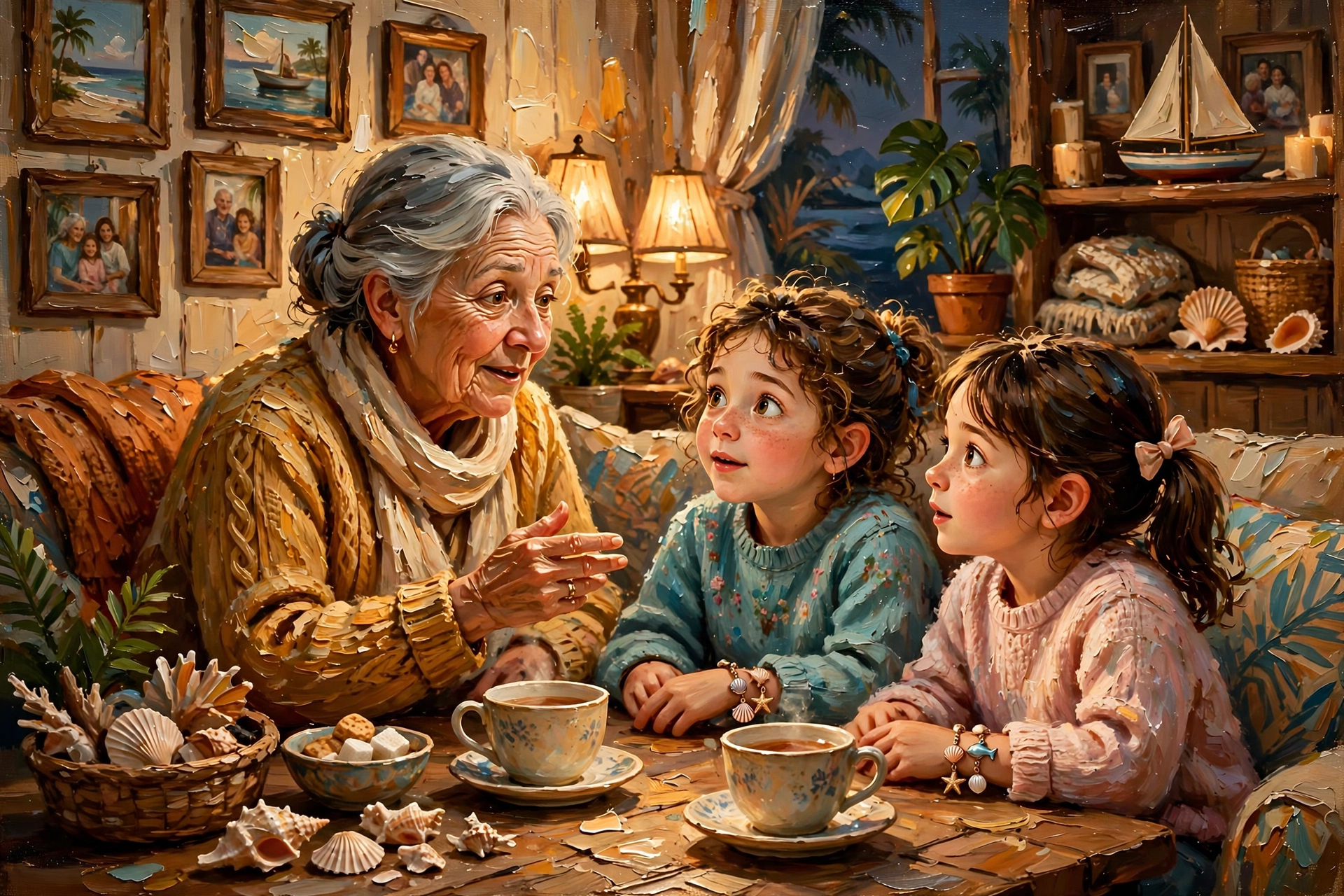
Jo and Raissa meet as tweens outside the school principal's office and become best friends on the spot. Jo cuts her own hair ties with a knife she brought to school and makes matching charm bracelets to mark it. Jo's grandmother, Lola, fills Jo's imagination with stories of Nakali, a mystical island from Filipino folklore that Lola says she once reached through a magical sand dollar. Jo's favorite creature in those stories is Manang, a vampire-like being Jo herself describes in a school report as a merciless murder machine that divebombs its prey.
The girls grow up together, adding a charm for every memory. Then graduation splits their road. Raissa is leaving for Caltech in America, and Jo has no plan to match it and is quietly terrified of losing her. On their last night together, on the beach, Jo finds Lola's fabled sand dollar, and the portal opens.
They wake on Nakali tattered and dazed, with a stretch of time missing. Raissa has lost the hair from one side of her head, and neither girl can remember how. With Raww, a teenage weredog who seems to know them already, as their guide, they retrace a wild first night they cannot remember, hunting for the sand dollar that can take them home. What they learn is that crossing over costs memories, and the island trades in them. A furry, cat-like memory demon named Batiba has been collecting other people's lives to fill her own empty one. And Manang is real, and she is hunting them, because Raissa, in the hours she cannot remember, stole Manang's wings.
Critics and audiences have been warm. The film sits in the mid-90s with critics, and opening audiences gave it an A. The reservation parents raise most is the pace: frantic, loud, and nonstop. Expect a beautiful, inventive, exhausting film with a tender center, not a gentle one.
What does the Bible say?
Proverbs 17:17 and John 15:13 carry this film, because friendship that lays itself down is its whole plot. A friend loves at all times. Jo first makes a selfish choice because she is afraid of losing Raissa. Then she apologizes, and she steps up to make a self-sacrificial choice for her friend. Raissa answers in the film's own words: you do not drag me down, you make me soar. That is a true picture of the friendship Scripture celebrates.
Psalm 103:2 carries the memory theme: praise the Lord, my soul, and forget not all his benefits. This film agrees that forgetting the good that has been given to us changes us for the worse, and it gives families a fine doorway into naming God's benefits out loud together. Isaiah 49:15 answers the film's deepest fear with better news than the island offers. God says, though a mother may forget, I will not forget you. Our memories can be shaken. His cannot.
Two talks are owed afterward, and the first is the spiritual world. As Pentecostal believers, we take that world seriously, and so, in its own way, does this film. Ephesians 6:12 says our struggle is not against flesh and blood, but against the spiritual forces of evil. Second Corinthians 11:14 warns that Satan himself masquerades as an angel of light. Nakali pictures both halves of that warning in cartoon form: a cuddly demon who lies and trades for memories, and a terrifying one who does not pretend at all. Neither one should be handed to a child as harmless fun without a parent naming what Scripture says is true. Evil is real, and it can look charming. And 1 John 4:4 says the One who is in us is greater than the one who is in the world.
The second talk is fear and grief themselves. Jo has lost her father, who never came back for her, and she loses Lola early in the film. Psalm 56:3 is the verse to leave with a child who carries any of this home: when I am afraid, I put my trust in you.
The Good
The friendship is the film, and it is taught the Bible's way. Jo and Raissa improve each other's lives across years. When Jo's fear makes her selfish, she does not hide it. She apologizes, and then she sacrifices for Raissa. That is the film's strongest message, and it is a true one.
Remembering good is treated as a duty and a joy. The film's point that stolen or forgotten good changes people for the worse sits comfortably beside Psalm 103:2. Families get a ready-made gratitude conversation out of this film. Memories make you who you are, and the film says so plainly.
A grandmother's love anchors the story. Lola tells Jo that good friends can be family, too, and after Lola dies the girls memorialize her with a charm on their bracelets. Grandparents are honored here, not mocked, and Filipino family and culture are celebrated with obvious affection throughout.
Families who were ready for it loved it. A mid-90s critics score and an A from opening audiences, with praise for the shifting animation styles, the folklore world, and the voice work, Lea Salonga's Manang included. For an older child who is not frightened by it, there is real craft and real heart to enjoy.
No alcohol, no drugs, and almost nothing sexual. On the content ledger, this film is clean in places many PG films are not. What it carries instead is scares and spirits, counted in full below. A family should choose it, or wait on it, for those reasons, with eyes open.
The Bad
Content counts at a glance
Profanity: mild in kind, edged for a PG kids film. Our count: d--- once, hella 3 times, crap 2 times, 2 cut-off phrases that start "son of a" and stop, 1 use of God's name, 1 p--- phrase, and 1 dismissive s--- phrase, 11 phrases in all. There are also milder words written whole by their nature: heck, frickin, flipping, and dang, plus a lot of cartoon word humor (poop jokes, body-part jokes, and mild obscenities of several kinds) and extensive name-calling. No f--- at all.
God's name used in vain: 1. Jesus' name used in vain: 0. A casual greeting spoken to a painting of Jesus is counted under faith below, where it belongs.
Violence: frequent scary action. A demon who separates at the waist and reassembles, fire attacks, chases, a bird slashed with purple blood splashing a hero's face, fake blood sprayed over an audience in a school play, a knife in a leg, and repeated threats to tear people apart and feast on corpses. This is the film's heaviest category by a wide margin.
Sexual content: light. A merman with talking starfish over his nipples, a giant's nipple ring worn as a crown, a baby photo with a bare bottom, and one hip-thrusting dance. Nudity beyond that baby photo: none.
Alcohol: none. Drugs: none. What characters do consume is energy drinks, traded to pixie-like creatures who get frantic and buzzed on them, and magic potions.
Tobacco: brief tobacco imagery, per the official rating. No scene was itemized in the research, so we print the rating's words and no more.
Rude humor: frequent. A weredog who pees on everything, fire from both ends after spicy food, and vomiting flames run through the film.
Spiritual content: pervasive. Demons, spirits, and a memory-trading demon are the island's population, presented as colorful and cute in some cases and as pure nightmare in Manang's. This, not the language, is the section most Christian parents will decide on.
Language
d---: 1. One use, plain and simple.
hella: 3. The stronger hell family appears in this slang form throughout.
crap: 2.
Cut-off "son of a" phrases: 2. The couple of unfinished uses arrive inside a clip from the film Predator, shown within this film. Parents should hear that detail, because it is odd to find an adult action film's language inside a kids' movie.
Other phrases: 1 use of God's name, 1 p--- phrase about angering people, and 1 dismissive s--- phrase.
Milder words: heck, frickin, flipping, dang, freaking, and oh my gosh, plus butt jokes and private-part jokes played for laughs.
Name-calling: extensive. More than 35 name-calling phrases, from liar, idiot, stupid, crazy, and losers to murder machine, psychotic vampire, and big demon baby.
God's name in vain: 1. Jesus' name in vain: 0. No hard profanity of any kind, and no f--- appears anywhere in the film's account.
Violence
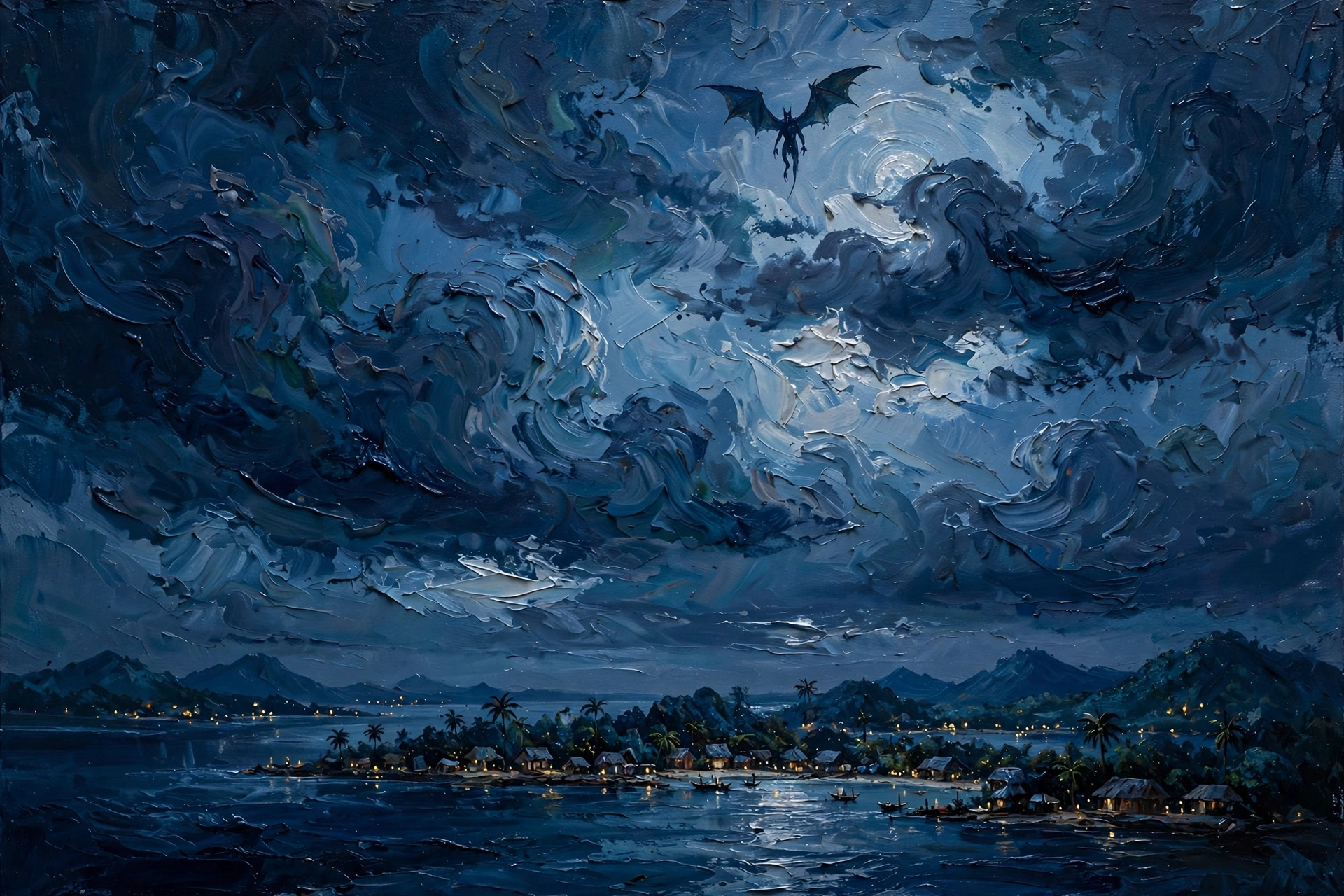
The official rating leads with animated sequences of scary action, and the scares are the film's main content. Manang is the center of it. She is large, muscular, pitch-black and winged, with glowing eyes, fangs, and talons. She separates her torso from her legs and reassembles at will, breathes and throws fire, and snarls the film's coldest line, that when mortals are torn apart, they do not go back together. She chases and attacks the girls repeatedly, knocks the flying Raissa out of the air into water where she nearly drowns, firebombs a village, and is said to have killed island residents who displeased her for years. A demon speaks of feasting on corpses and bathing in victims' blood.
Around her, the action never really stops. Jo tackles and punches a boy who mocks her grandmother's stories, bloodying his nose. Jo's knife ends up jammed in Raww's leg. The girls tie Raww up and repeatedly rip duct tape and fur off him as a running gag. A creature slashes a bird and purple blood splashes across Raissa's face. A school stage act ends with an exploding figure spraying the audience with fake blood. Cars and buses crash, fireworks set a party table ablaze, swords, spears, and arrows are thrown, and small warriors speak of bathing in an enemy's blood.
Two heavier threads sit under the cartoon action. Lola is seen in a hospital and dies, and Jo is left devastated. And a birth is witnessed inside a memory, with a demon baby's umbilical cord cut off screen. None of this is graphic in the live-action sense. All of it is a lot for a young child to carry.
Sexual content and romance
Sexual content: light, and strange rather than romantic. The merman prince is a large, muscular figure with a bare chest whose nipples are covered by sentient, talking starfish, along with a fishnet-like top with tiny pink star-shaped pasties and makeup. Jo wakes wearing a giant's pierced nipple ring as a crown, and the merman admits he always thought Manang was hot. Raww recalls a vampire coming on to him and swoons over it.
One dance beat: a teen girl dances standing over a radio with her legs spread wide, thrusting her hips, shot from a low angle.
Nudity: a baby photo only. Raissa's mother projects childhood pictures at the going-away party, including baby Raissa sitting bare-bottomed on a toilet. No other nudity appears.
Romance: essentially none between the leads. Their bond is friendship. Jo draws a comic making Raissa the love interest of the merman and of Raww, both drawn with exaggerated muscles. That is the extent of it.
Alcohol and drugs
Alcohol: none.
Drugs and smoking: no drug use. The substances on screen are highly caffeinated energy drinks, which the girls trade to pixie-like creatures who become frantic and buzzed and trade potion bottles for more, and magic potions that characters drink. Parents who count caffeine-as-a-joke for little kids will want to know the energy drinks are played for laughs.
Tobacco: brief tobacco imagery, per the official rating only. No tobacco scene is described in the research. We do not guess at one.
Mocking of faith, and other things parents ask about
The island's demons are the faith conversation, and they fill the film. Nakali's population is demons, spirits, and folklore creatures. Batiba, the memory demon, looks like an oversized, furry, almost cuddly cat, and she lies and trades for people's memories to fill her isolated life. Nearly everyone the girls meet lies to or betrays them. The film also celebrates a child's interest in a demonic creature like Manang, so viewers should be cautious about the demon imagery before viewing. Our pastoral call is the same as with any film built on spirits: this is a talk, held with Scripture open (Ephesians 6:12; 2 Corinthians 11:14; 1 John 4:4), and for tender or very young children it is a reason to wait altogether.
Jesus appears in the film, and families will weigh that scene differently. At Raissa's going-away party, her family hangs a picture of Jesus over the buffet table, and Jo walks up and greets it casually, asking if it has seen Raissa. Jo also alludes to being kicked out of Catholic school, and Lola throws a shoe at a neighbor who crosses herself in Jesus' name after calling Lola a witch. The painting is greeted with no reverence, and it is later framed as if Jesus might be judging what Jo caused. It could be read as mocking people of faith, and it could be the filmmakers including Jesus because He matters in Filipino Catholic culture. Both readings are possible. Now you have heard about it from us first.
Death and abandonment are plot, not background. Jo's father never came back for her. Lola gets sick and dies early in the film, and Jo is devastated and alone except for Raissa. A child who has lived either loss will meet it again here, at full emotional weight.
Rule-breaking and payback are played for laughs. The teen girls ransack a bully's car for rocket parts, and Lola helps them instead of stopping them. Lola also threatens a neighbor in a wheelchair, telling her to mind her business or she will break her other leg, and throws her slipper at her. Jo brings a knife to school and punches a classmate. The film loves its rebels. Parents get to name where courage ends and recklessness begins.
Mocking of Christianity as a system: none. No church service is mocked and no believer is held up for ridicule as a believer. The items above are a casual greeting to Jesus' picture, a witch accusation between neighbors, and a demon-filled worldview. Each is carried plainly so your family can weigh it for yourselves.
Parental Takeaways
Best fit: older kids and tweens, roughly 10 and up, with a parent watching. Our own floor sits higher than the lightest outside guidance, on purpose. Age guidance for this film ranges widely, from age 8 up at the lightest end to 12 and up from many parents, who call the PG rating misleading and report families walking out. The strictest reading says most parents may still want to keep their tween-and-under kids very far away from this film. Our call: under 9, wait. Ages 9 to 11, only for a child who handles monsters well, and only together. The deciding factors are Manang and the demons, not the language.
Preview the demon, not the message. If your child scares easily or has had nightmares about monsters, watch the trailer's Manang moments together first. She separates her body, breathes fire, and hunts children on screen for most of the film. No friendship lesson is worth a month of bedtime fear.
Know the small things before they surprise you. One use of God's name. A casual hello spoken to a painting of Jesus. A merman's starfish nipples and a nipple-ring crown. Fire and pee humor from the weredog, again and again. And energy drinks handed to pixies as a joke. None of these is the headline. All of them land better when a parent has heard them here first.
Talk on the way home. What does the Bible say demons are, and why do we not treat them as cute (Ephesians 6:12; 2 Corinthians 11:14)? Who is greater than anything scary (1 John 4:4)? What good things has God given our family that we never want to forget (Psalm 103:2)? And when Jo chose herself out of fear and then apologized and sacrificed, what changed?
Hold the grieving child in the room. If your family has lost a grandparent, or a parent is absent, say so before the film, not after the hospital scene. Jo's losses are the engine of her fear, and a child carrying the same losses will feel this film in a different place than the child beside her.
Carry this with you. Forgotten Island is a critically loved, beautifully made film about a friendship worth remembering, built inside a demon-filled island that Christian parents should think hard about before showing young children. Both halves are true. For older kids watching with a parent who will talk, there is a good and even useful evening here. For little ones, it can wait, and waiting costs nothing. Final rating: 2 out of 5 for Christian families.
Our Standards Promise
We try and we strive to make sure that our standards are as high as possible. If we miss the mark, let us know. We'll re-review. We'll renumber. We'll recategorize.
Our war is not against people. It is against principalities and the spiritual realm. A film that does not make one person stumble might make someone else stumble, and for children that is a different story. So we apologize ahead of time when we miss. We course correct, we own our fault, and we grow closer to clarity and to Christ together. If a review misses something, tell us, and we will correct it in love.
Questions people ask
Why is Forgotten Island rated PG? For animated sequences of scary action, language, rude humor, thematic elements, some violence, and brief tobacco imagery. Those are the official rating's own words. The scary action is Manang and the island's demons. The rude humor is the weredog's potty humor and the fire gags. PG means parents should decide based on their own child's age and sensitivity, and on this film the guidance spreads wider than usual, from age 8 to very far away for tweens and under.
Is there any profanity in Forgotten Island? Yes, mild in kind and steady in use. Our count: d--- once, hella 3 times, crap 2 times, 2 cut-off "son of a" phrases (heard inside a clip from Predator shown in the film), 1 use of God's name, 1 p--- phrase, and 1 dismissive s--- phrase, plus milder words like heck, frickin, flipping, and dang, poop jokes and body-part jokes of several kinds, and extensive name-calling. No f--- at all.
Watch it your way
The film is on digital purchase and rental now, with disc to follow on December 1, 2026. Some families will want a hand with the language and the potty humor, and no filter can soften a scary demon, so previewing stays the first tool. For the parts filters do cover, tools like these can help you set what your family sees and hears. We list them as helpful tools for families, not as paid advertising, and Boundless receives nothing for naming them.
VidAngel (vidangel.com) lets you set your own filters on supported streaming services, choosing what gets muted or skipped. We did not find a per-title filter listing for this film, so check the title inside the tool before you count on it.
Enjoy Movies Your Way (enjoymoviesyourway.com) applies your own filter settings to movies and shows on the major streaming services, with language filtering and, for its tagged library, scene filtering. We did not find a per-title listing for this film there either.
*Need prayer right now? Text 1-901-213-7341 and someone will pray with you. You can also reach our home church, First Assembly Memphis, at (901) 843-8600. Boundless is an online church family for people who cannot get to a building. You can belong here, and we will help you find a local Assemblies of God church near you. Visit boundlessonlinechurch.org. In an emergency, call 911. In a crisis, call or text 988, any time, day or night. Our prayer line is for prayer, not for emergencies.*


Comments