
Tuesday Truths: The Fine-Tuned Universe
- Boundless Team

- Feb 26
- 5 min read
Have you ever stopped to think about how ridiculously specific the conditions had to be for you to exist right now, reading these words?
I'm not talking about your parents meeting or your grandparents surviving wars or any of that: though those are wild odds too. I'm talking about something way bigger. The entire universe had to be calibrated with mind-blowing precision just for matter to form, stars to shine, planets to spin, and life to even have a shot.
Scientists call this the "fine-tuned universe," and when you dig into the numbers, it's absolutely breathtaking. Whether you're a person of faith, someone exploring questions about God, or just curious about how science and spirituality intersect, this is one of those topics that makes you pause and wonder.
What Does "Fine-Tuned" Even Mean?
Think of the universe like a massive control panel with dozens of dials: each one representing a fundamental constant of nature. There's a dial for gravity's strength, another for the electromagnetic force, one for the strong nuclear force that holds atoms together, and so on.
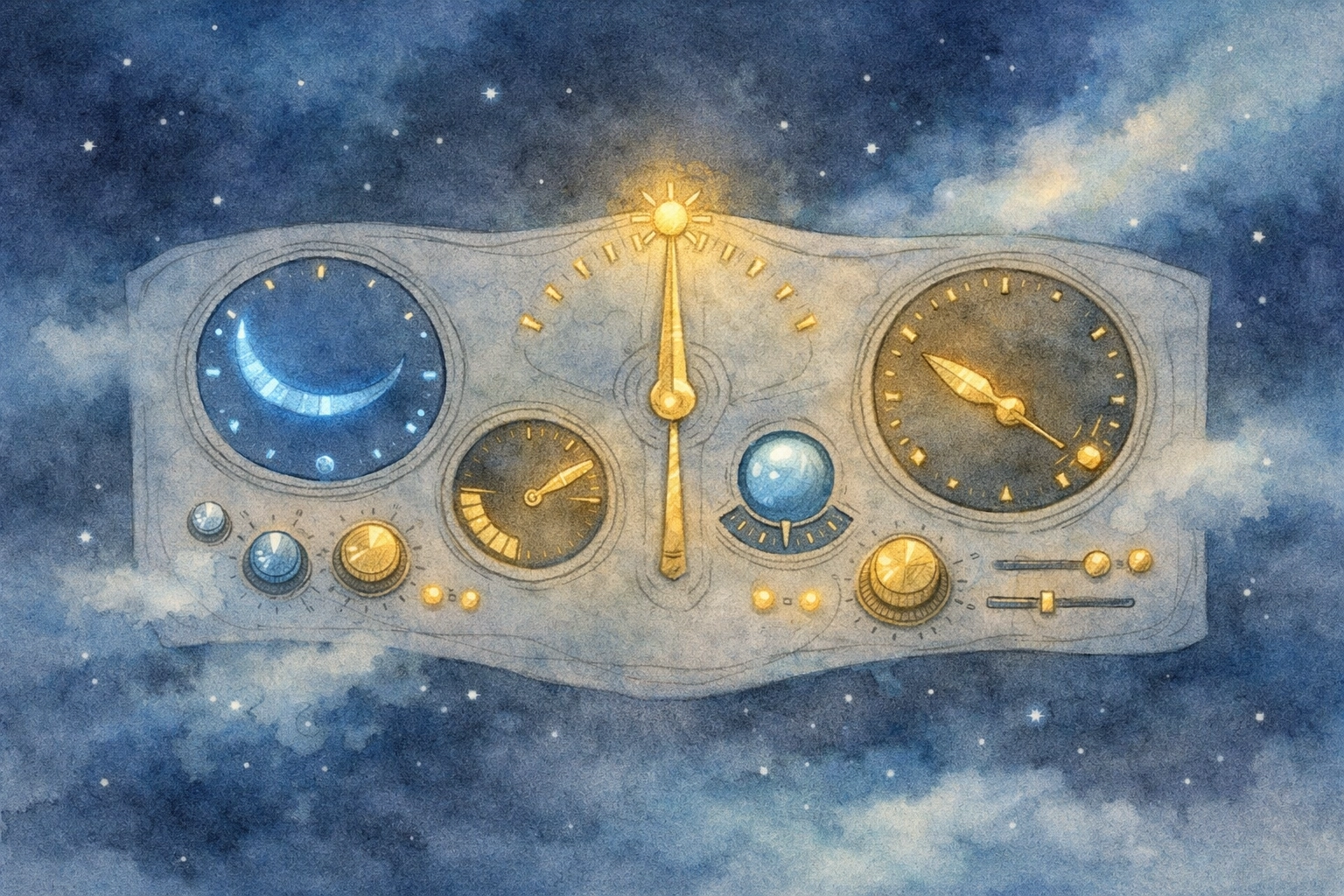
Now here's the kicker: if any of those dials were turned even slightly: we're talking fractions of a percent in some cases: the universe as we know it couldn't exist. No stars. No planets. No water. No life. Nothing.
It's not like these constants could vary a little and we'd just have a slightly different universe. We're talking about a universe where matter itself couldn't form or where everything would instantly collapse or explode. The margin for error is unbelievably, almost impossibly small.
The Numbers Are Staggering
Let me share a few specific examples that genuinely blow my mind every time I think about them.
The Strong Force: This is the force that holds the nucleus of atoms together. If it were just 2% weaker, you couldn't form any elements heavier than hydrogen. That means no carbon, no oxygen, no building blocks for life. But if it were 2% stronger, all the hydrogen in the universe would have been converted to helium and heavier elements right from the start. No hydrogen means no water and no long-term fuel for stars. We exist in this razor-thin 4% window.
Gravity and Electromagnetism: These two forces are balanced so precisely that if gravity were slightly stronger or electromagnetism slightly weaker, every star in the universe would be a red dwarf: too dim and unstable to support life-bearing planets. Flip it the other way, and every star becomes a blue giant that burns out way too fast for life to develop. The balance is perfect.
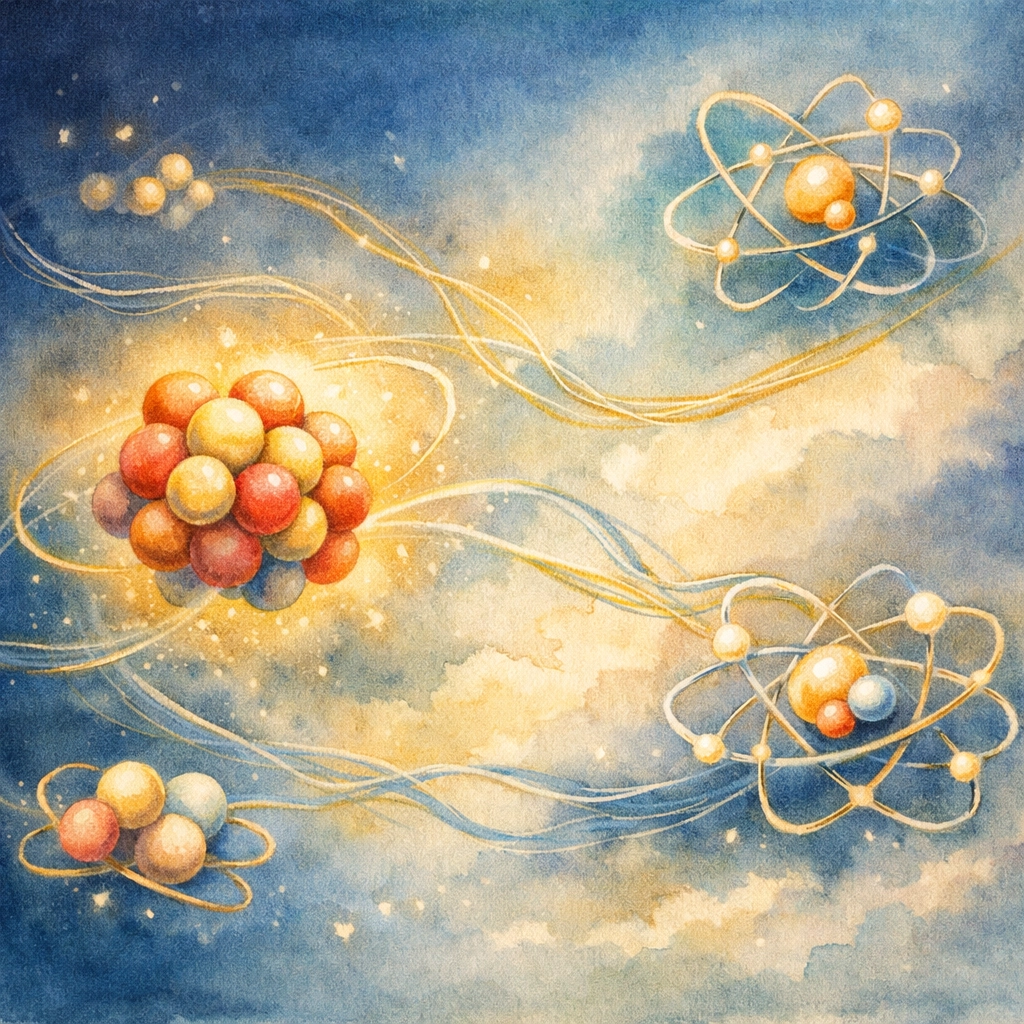
Entropy: According to the second law of thermodynamics, the universe should naturally move toward chaos and equilibrium: maximum disorder. Yet our universe started in an extraordinarily low-entropy state, incredibly ordered and fine-tuned. Physicist Roger Penrose calculated the odds of this happening by chance. The number is so large it's almost meaningless to our brains: 1 in 10 to the power of 10 to the power of 123. That's not a typo. We're not talking winning-the-lottery odds. We're talking odds that make winning every lottery on Earth simultaneously for a thousand years look absolutely certain by comparison.
What Do Scientists Say?
The scientific community recognizes the fine-tuning: that's not disputed. What they debate is what it means.
Some scientists propose the multiverse hypothesis: maybe there are countless universes out there, each with different physical constants, and we just happen to live in one that works. It's like saying if you have infinite lottery tickets, eventually one will win. That's certainly possible, though we have no way to test or observe other universes.
Others, like Stephen Hawking and Thomas Hertog, proposed top-down cosmology: suggesting that the universe's initial conditions existed as a superposition of all possibilities, and only certain histories contribute to what we observe now. It's fascinating quantum physics stuff.

Here's what I find interesting: even among scientists who don't believe in God, many acknowledge that fine-tuning is one of the most profound mysteries in physics. It demands an explanation. The universe didn't have to be this way, but it is.
Where Faith Meets Physics
For me, the fine-tuning of the universe isn't a problem that needs solving with increasingly complex theories: it's a signpost pointing toward something greater.
When I look at the precision required for existence itself, I see the fingerprints of an intentional Creator. Not a distant, disinterested force, but a personal God who crafted the universe with purpose and care. The same God who set the constants that govern galaxies is the same God who knows your name and counts every hair on your head.
The Bible tells us, "The heavens declare the glory of God; the skies proclaim the work of his hands" (Psalm 19:1). When you understand just how finely tuned creation is, that verse hits different. The glory is written into the fabric of reality itself.
This doesn't mean science and faith are at odds. They're asking different kinds of questions. Science asks "how?" and gives us these incredible insights into mechanisms and processes. Faith asks "why?" and points us toward meaning and purpose.
It's Personal
Here's what really gets me: the God who fine-tuned gravity and calibrated the strong nuclear force with mathematical precision didn't stop there. He didn't just wind up the universe like a clock and walk away.

He entered into His creation. He became human. He knows what it's like to be tired, hungry, heartbroken, and betrayed. He experienced the full weight of being human in a finely tuned universe that He Himself designed.
And He did all of that because He loves you specifically. Not humanity as an abstract concept: you. The fact that you exist against impossible odds isn't an accident. You're not a cosmic fluke. You're known, you're loved, and you're here for a purpose.
If the universe required such intentional design to simply exist, how much more intentional is your life? How much more purposeful is your story?
An Invitation to Wonder
Whether you're already walking with God or you're just starting to ask questions, I want you to know: you're welcome here. Faith isn't about having all the answers or pretending there aren't hard questions. It's about following the signposts toward truth, beauty, and love.
The fine-tuned universe is one of those signposts. It invites us to wonder, to be amazed, and to consider that maybe: just maybe: there's more to this existence than random chance and cosmic luck.
Science reveals the "how" with stunning detail. Faith offers the "why" with profound meaning. And when you hold them together, you get a fuller picture of reality than either one alone could provide.
You're never forgotten. You're never alone. You're deeply loved by the God who set the stars in motion and knows every detail of your life. That's not wishful thinking: it's written into the very fabric of the universe itself.
Let's Keep Exploring Together
If this topic sparked something in you: curiosity, wonder, questions, or even disagreement: I'd love for you to keep the conversation going. Go to the Boundless website and join the Bible Study Club. Connect with Christians around the world to discuss these studies, pray together, and grow closer to God and each other.
Need prayers? Text us day or night at 1-901-213-7341. Boundless Phone: 1-901-213-7341 FA Memphis: 1-901-843-8600 lmcdonald@famemphis.net - www.boundlessonlinechurch.org
Dr. Layne McDonald
Comments