

How Should Christians Defend Human Dignity When War Encourages Dehumanizing Language?


Short answer: Christians should tell the truth about wrongdoing while refusing words that erase anyone’s God-given worth. We can condemn attacks, demand accountability, protect civilians, and grieve victims without treating an entire people as less than human.
The image of God does not disappear in war
Genesis 1 teaches that human beings bear God’s image. James 3 applies that truth to speech: we cannot bless God while cursing people made in God’s likeness. War does not cancel this doctrine. Nationality, ethnicity, religion, political identity, or military allegiance cannot turn a human being into an object.
This does not mean moral confusion. Scripture names injustice plainly. Prophets confronted rulers. Jesus exposed hypocrisy. Romans 13 recognizes public authority and accountability. Christian restraint is not silence; it is truthful speech governed by love, evidence, and the refusal to enjoy another person’s suffering.
Dehumanizing language changes what people permit
Words such as vermin, animals, contamination, or collective traitor labels can make cruelty feel normal. Online repetition can flatten individuals into categories before verified facts are known. Christians should be especially cautious with images, casualty claims, and dramatic clips that lack a clear date, source, or location.
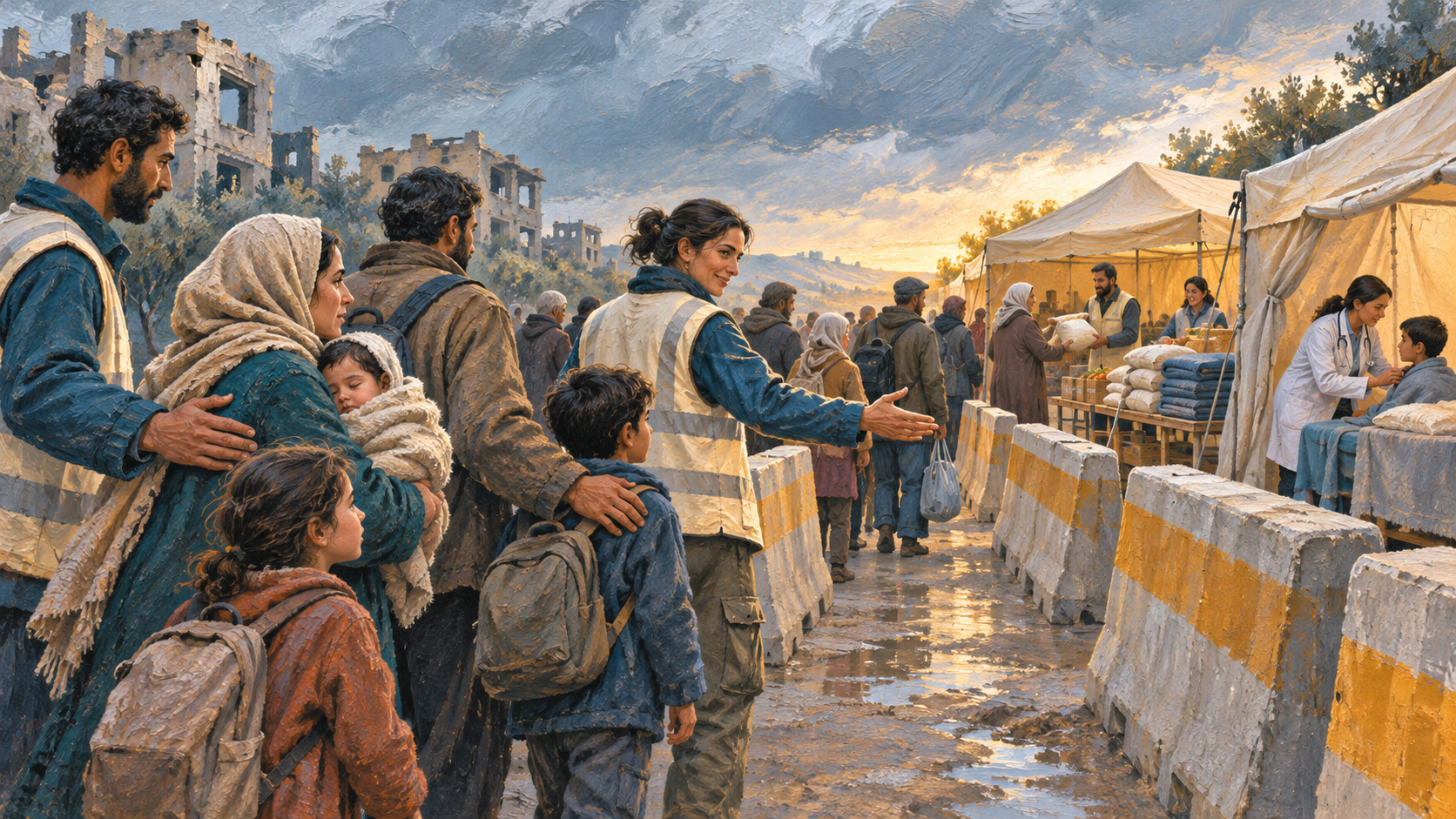
What current reporting establishes
Recent United Nations reporting from Sudan and Ukraine describes serious civilian harm and reiterates that civilians, medical workers, aid sites, and civilian infrastructure receive protection under international humanitarian law. These reports document specific concerns; they do not authorize us to assume every circulating claim is verified or to assign guilt to every member of a population.
Current primary reporting: United Nations report on civilian harm from drone strikes in Sudan, November 17, 2026
Current primary reporting: United Nations in Ukraine report on intensifying attacks and civilian deaths, November 17, 2026
Faith-community perspective: November 4, 2026 joint statement on humanitarian law and faith-based advocacy
Six habits for Christian speech during war
1. Verify before sharing. Check the original source, date, location, and whether later reporting corrected the claim.
2. Separate governments, armed groups, soldiers, civilians, and diaspora communities. Collective blame is intellectually careless and spiritually dangerous.
3. Name evidence levels. Say “verified,” “reported,” “alleged,” or “unclear” as accurately as the available evidence permits.
4. Refuse celebratory cruelty. Justice may require restraint and accountability; it never requires delight in suffering.
5. Listen to affected Christians and humanitarian workers without turning their pain into partisan content.
6. Pray for enemies, victims, leaders, peacemakers, captives, displaced families, and those providing care. Prayer broadens our moral vision rather than shrinking it.

How Christians should disagree
John 13:34–35 says our love identifies us as Jesus’ disciples. Ephesians 4:29–32 calls for speech that builds up, compassion, forgiveness, and the removal of malice. Romans 12:18 urges peace as far as it depends on us. None of this requires overlooking war crimes, abuse, terrorism, or propaganda. It requires confronting evil without becoming shaped by hatred.
Fair reporting also avoids false equivalence. If evidence strongly establishes one event and another claim remains unsupported, we should say so. Humility means adjusting our view when credible evidence changes, not pretending every assertion deserves equal weight.
Practical next steps
Choose one reliable primary source to follow instead of consuming a constant stream of unverified clips. Pause before reposting emotionally charged material. Correct misinformation you previously shared. Support reputable humanitarian work without exploiting images of suffering. If a conversation becomes dehumanizing, say calmly: “We can condemn the act without denying anyone’s humanity.”
Reflection
Have my words made suffering easier to dismiss? Do I verify claims that confirm my own side as carefully as claims that challenge it? Can I name wrongdoing without collective contempt? Is my speech helping neighbors pursue truth, prayer, and protection for the vulnerable?
A short prayer
Lord Jesus, Prince of Peace, protect civilians and those serving them. Expose lies, restrain violence, comfort the grieving, and lead leaders toward justice. Guard our words from hatred and make us courageous defenders of truth and human dignity. Amen.
Stay connected to Christ-centered community
Boundless offers prayer, Bible studies, worship, and online groups for people following difficult events from home, work, caregiving settings, or isolated places. We encourage participation in a healthy local church committed to truth, compassion, safeguarding, and service.
Visit Boundless Online Church: prayer and Christ-centered community


Comments