
The Beginner's Guide to Digital Discipleship: How to Share Jesus Using Tech You Already Own
- Boundless Team

- Feb 26
- 5 min read
Part of our Faith & Tech Series: Exploring how everyday digital tools can help families share the message of Jesus—safely and simply
You don't need a podcast studio, a YouTube channel, or thousands of followers to make an impact for Jesus online.
You just need a phone, some authenticity, and the willingness to show up where people already are.
That's digital discipleship.
And chances are, you're already doing pieces of it without even realizing it.
What Digital Discipleship Actually Is
Digital discipleship is simply helping someone grow spiritually using online platforms: email, text messaging, video calls, social media, or any digital tool you already use daily.
It's not complicated.
It's not reserved for tech experts or influencers.
It's just meeting people where they are and walking alongside them in their faith journey using the devices sitting in your pocket right now.
At Boundless Online Church, we've seen firsthand how powerful these simple tools can be when used with intention and genuine care.
Start With Connection, Not Perfection
Here's the thing most people get wrong about digital ministry: they think they need to have everything polished and perfect before they start.
Wrong.
People don't connect with perfection. They connect with authenticity.
They connect with someone who's transparent about their own struggles, consistent in showing up, and genuinely interested in their story.
Being vulnerable and relatable will always beat polished content.
Always.
Digital discipleship begins by building genuine relationships online: not broadcasting at people, but engaging with them as real human beings with real struggles and real questions about faith.

Know Your Audience (It's Simpler Than You Think)
Before you stress about which platforms to use or what content to create, ask yourself one question:
Where do the people I want to reach actually spend their time?
If they're on Instagram scrolling through reels, that's where you should be.
If they're in Facebook groups or WhatsApp chats, start there.
If they're watching YouTube videos or listening to podcasts during their commute, consider those platforms.
This targeted approach makes your efforts far more effective than spreading yourself thin across every platform that exists.
Pick one or two. Do them well. Build from there.
At Boundless Online Church, we focus on meeting people where they already are: whether that's through our Sunday Live Worship, podcasts, or social media presence.
Tech You Already Own (Family-Safe and Simple)
Let's get specific about what you can use right now—no new purchases required.
The goal is steady encouragement and real connection.
With healthy boundaries.
Your Phone’s Calls + Text Messages
Call someone who’s having a hard week.
Text a quick prayer.
Send one Bible verse and a sentence about why it encouraged you.
Simple messages build trust over time.
Group Texts (With Clear Expectations)
For families and small groups, a basic group text can go a long way.
Set a few guardrails:
Keep it encouraging and respectful
No late-night texting
Parents can stay included when it’s a kids/teen group
Email (Still One of the Safest Tools for Families)
Email is slower—and that’s a good thing.
Share a weekly devotional thought, a Bible reading plan, or a simple “How can I pray for you?” check-in.
It’s also easier to archive, review, and keep organized.
Video Calls (For Real Face-to-Face Conversation)
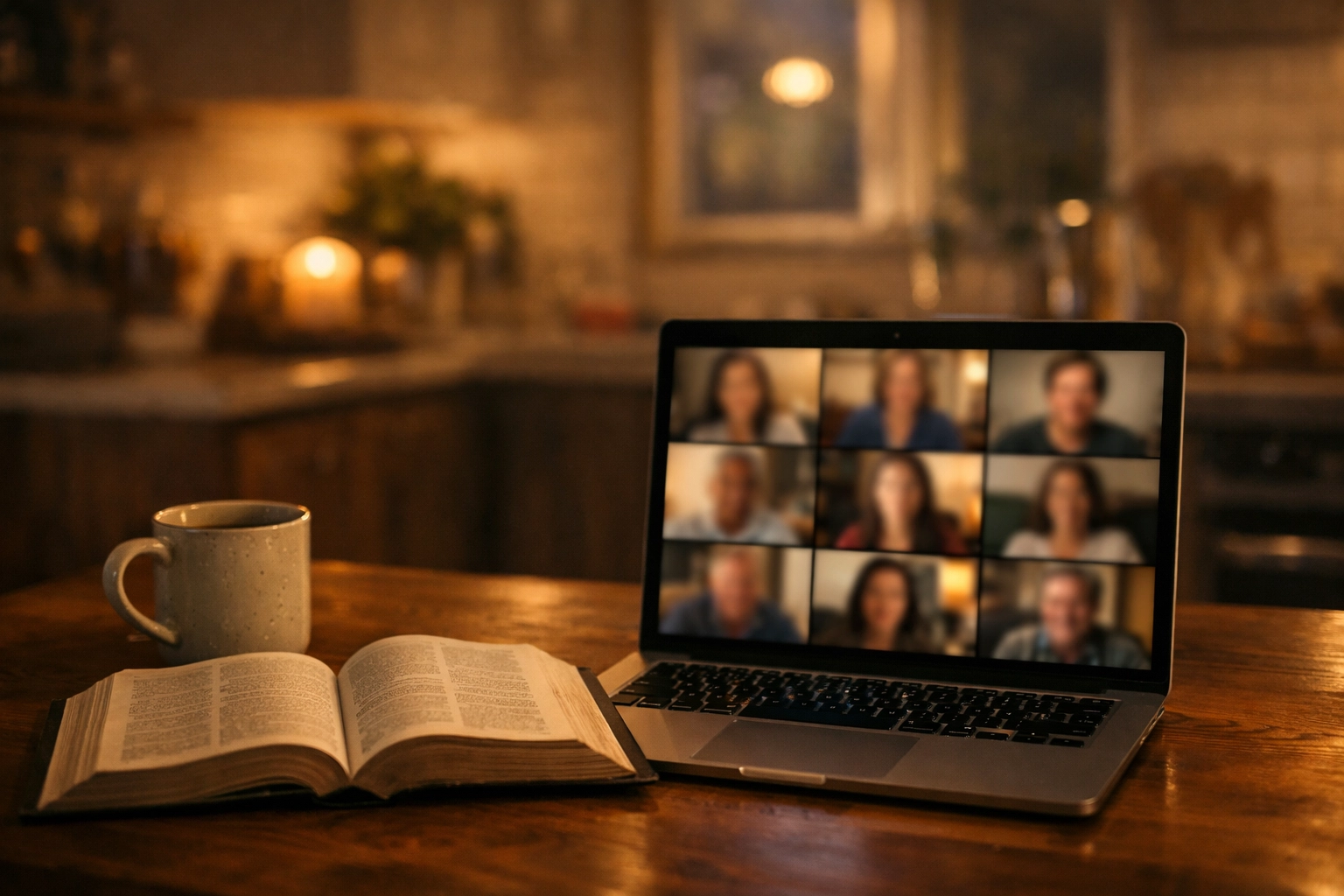
Zoom, FaceTime, and Google Meet are great for:
one-on-one prayer and encouragement
family devotion time with relatives who live far away
small group check-ins
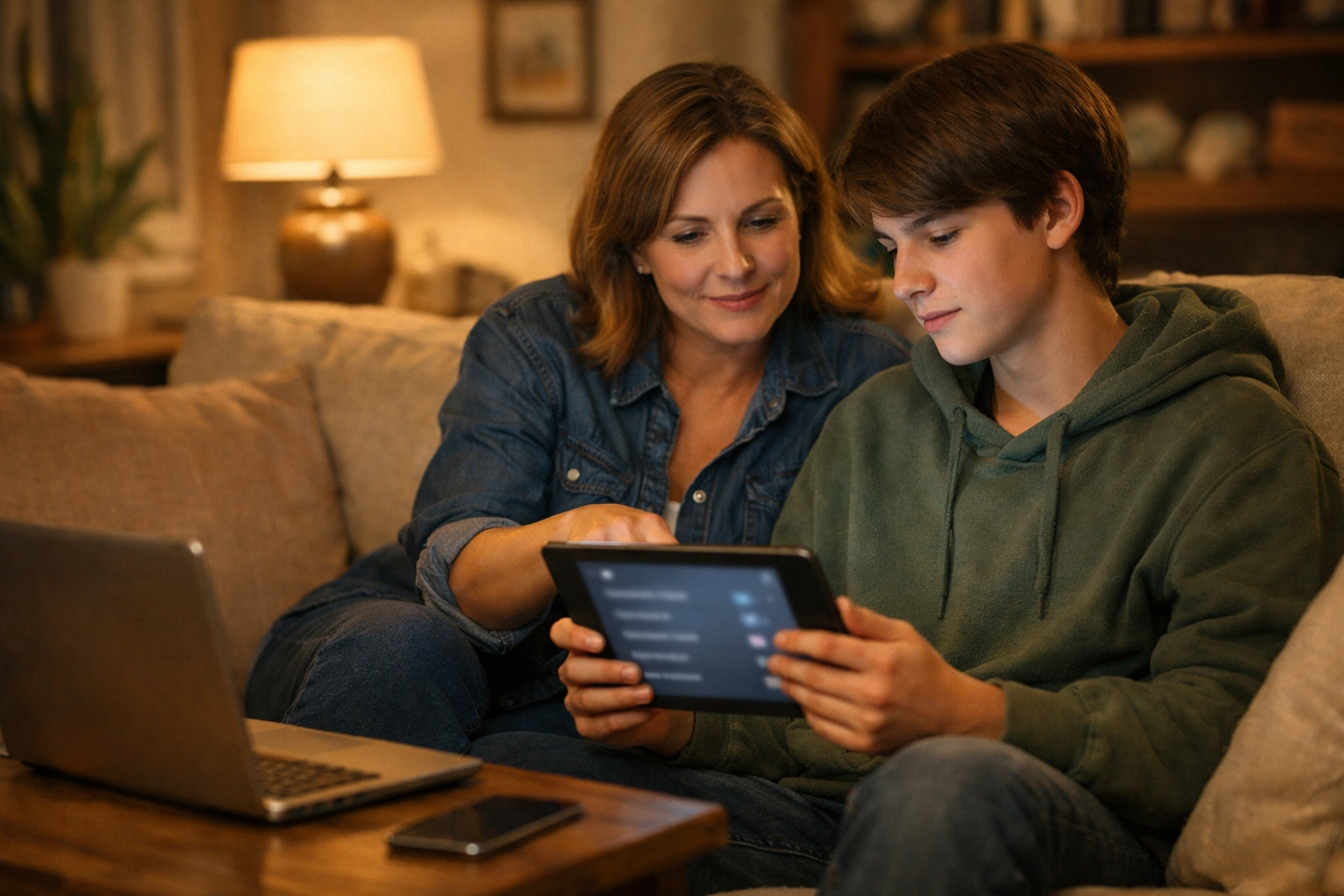
Tip for families: use shared spaces (like the kitchen table), not bedrooms, for video calls—especially with kids and teens.
Church Websites + YouTube on the TV (Not Just on Personal Phones)
If your family watches sermons or Bible teaching online, consider watching on a shared screen (like the living room TV) instead of everyone on their own device.
It keeps discipleship more communal—and gives parents more awareness of what’s being watched.
Five Practical First Steps
1. Pick One Focus Area
Choose one or two things you can do consistently rather than trying to manage every platform and tool.
Maybe you decide to send a weekly devotional email. Or start a WhatsApp group for prayer requests. Or share daily encouragement on Instagram stories.
Start small. Stay consistent. Build gradually.
2. Engage Meaningfully
Don't just broadcast content into the void.
Respond to people's comments. Ask genuine questions. Listen more than you speak. Show real interest in their lives: their wins, their struggles, their doubts, their celebrations.
Building trust through authentic interaction matters more than frequency or reach.
3. Invite People Into Spiritual Growth
Encourage your online community to explore faith together.
Suggest they download a Bible app like YouVersion. Follow a Bible reading plan together. Watch a short Bible Project video and discuss it. Join you for our Sunday Sermons online.
Make it participatory, not just passive consumption.
4. Offer Practical Spiritual Support
Record audio prayers and send them to people who are struggling.
Celebrate answered prayers publicly (with permission).
Follow up on prayer requests: not just once, but consistently.
Help people feel included, valued, and remembered.
5. Review and Adjust
After a few months, notice what's working and what isn't.
Keep doing what resonates with your audience. Try something new if something isn't effective.
Digital discipleship is a learning process, not a formula.
Keep It Sustainable (This Is Critical)
The biggest mistake people make in digital ministry is burning out in the first three months because they tried to do too much too fast.
Don't be that person.
Start small. Stay consistent. Build gradually over time.
You don't need fancy equipment, multiple platforms, or perfectly produced content.
You just need genuine faith, honest engagement, and the willingness to show up regularly where people already are online.
That's it.
At Boundless Online Church, we've built our entire digital presence on this principle: showing up consistently, engaging authentically, and making it sustainable for the long haul.
Whether it's through our Pastor's Notes Podcast, our A Way Out Podcast, or our online community groups, we're committed to being present where people need us most.
You're Ready to Start
Digital discipleship isn't rocket science.
It's not reserved for tech-savvy millennials or professional content creators.
It's for anyone who loves Jesus and wants to help others grow in their faith using the tools they already own.
The device in your hand right now? That's your mission field.
The apps you check daily? Those are your ministry tools.
The people you interact with online? They're your community.
Start today. Start small. Stay consistent.
And watch what God does with your willingness to meet people where they are.
Stay connected with Boundless Online Church for more Faith & Tech insights, practical ministry tools, and resources to help you grow in your digital discipleship journey. Follow us and subscribe at www.boundlessonlinechurch.org for the latest news, series, and community updates.
Questions about digital discipleship or want to connect?
Boundless Online Church 24/7 Assistant: 1-901-668-5380
Boundless Phone: 1-901-213-7341
FA Memphis: 1-901-843-8600
Email:lmcdonald@famemphis.net
Website:www.boundlessonlinechurch.org
Dr. Layne McDonald is the Online and Connection Pastor at FA Memphis and Boundless Online Church, helping people discover practical ways to live out their faith in an increasingly digital world.
Comments